The Storm
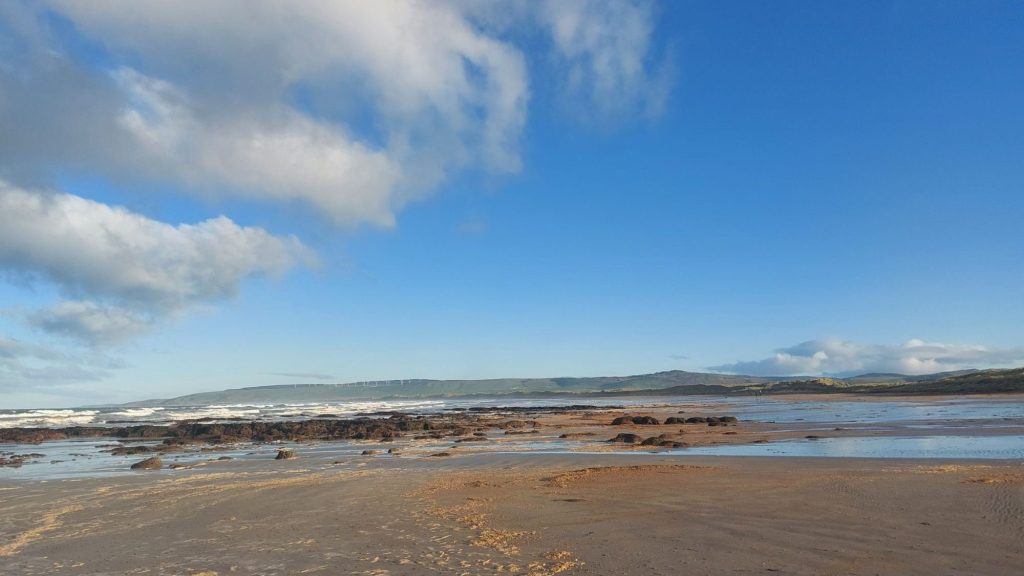
On the Sunday after Storm Darragh hit the west coast in early December, I headed to the beach that I walk time and time again in all seasons. The power of the waves coming in off the Atlantic carve out a coastline that is never the same, but on this day it was dramatically different. Rocks that slowly appear and disappear over months were visible; in a day and a half at least a metre of sand had been washed away. I walked my usual path and contemplated a metaphor forming in my mind of stripping away something with such force and energy in order to transform what was there before.
We talk transformation all the time in health and social care; this is framed with having less money to do what we currently do and rising demands from an older and more unwell population – i.e. deficits driven transformation. We also frame this from the perspective of scarcity, rather than plenty and from a “what’s wrong” rather than a “what’s strong” stance.
The reality is that true transformation is impossible to achieve so what we do is the incremental change that you only see when you look back over a period of time. Change akin to watching our children grow up, it goes unnoticed day to day and week to week, but looking back at photos from a year or two ago it is clear, they really are stretching in their sleep.
The reason true transformation is impossible is we can’t do it from within whilst at the same time delivering a highly complex system of intertwined health and social care services. Change theory tells us that an existing system is like an elastic band that will ping back to the norm as this takes less energy than the energy required to sustain the stretch.
Another layer of complexity in transformational change of health and social care is achieving clarity of what the intended goals are. For example, are we aiming for better services to treat people when they are ill or are we aiming to stem the flow of people into services by making our population healthier. In Scotland, we had that clarity in 2011 when the Christie Commission recognised the public sector spent 40% of all resource on problems that are preventable and made clear recommendations for change. Some of the structural recommendations from Christie were relatively easily realised with legislation for integrated health and social care, and community empowerment. However, more than a decade later, realigning services to be preventative remains out of reach and looking back over the course of the last decade, that’s likely because a clear route map for how services would become preventative was not developed.
Back to my walk on the beach and contemplating transformation and aspirations for a healthier population and a better Scotland. My radical spirit wondered can we wash away what we currently do across services and rebuild a new, preventative and holistic way of enabling people to achieve their full potential. Of course that will never happen, but I will forever advocate for doing things differently.
But could it be we are looking in the wrong places for answers to the wicked problems of rising demand, deteriorating health, reducing budgets and staff shortages?
My heart always takes me to improving the social determinants of health rather than downstream mitigation of ill health and this is actually really simple stuff. People lead better lives in areas where the social fabric of life is strong – good schools and employment opportunities, affordable housing and food, and rich and vibrant communities with things to do and support when it’s needed. The true transformation we should be aspiring to is a flourishing and prosperous Scotland, for we will surely live better lives in that Scotland.
Community Wealth Building
Community Wealth Building (CWB) is an economic approach to circulate wealth and investment into communities for the benefit of local people. Scotland is a rich country with many natural resources and assets, yet much of this wealth is stripped out of our hands like sand off the rocks and goes to benefit invisible wealthy corporations and individuals.
Ahead of me as I walked along the beach after the storm are rows and rows of wind turbines. Tall and majestic on the rolling hills of Kintyre. Scotland is leading the way in the Just Transition to net zero and these turbines feed into the national grid, we see that from the less majestic rather imposing electricity pylons running up the spine of the peninsula. These turbines are incredibly lucrative generating tens of millions of pounds annually for Scottish Power Renewables, the Spanish owned energy conglomerate. In fact the latest phase of this wind farm has financial backing from Amazon.
Supporters of these wind farms may point to the community benefit grants that are available, yet these grants are a tiny fraction of the total profits generated from wind and it is entirely voluntary for private energy producers to do this. Might I add wind belongs to no-one and is limitless, yet it has been commodified for profit with very little of that profit benefiting ordinary people.
On the horizon as I walk on the beach is the island of Islay, the last port of call before the sea gives way to the Atlantic Ocean. Islay is one of the five whisky regions of Scotland with that distinct peaty flavour that seeps into the water used in the distilling process. Like wind, whisky is also incredibly lucrative, with £11m every single week from Islay being paid into the UK Treasury and even more generated as profit.
Peat and coal were once the mainstay of warmth and fuel in Scotland, indeed in Kintyre the long closed coalmines of Drumlemble nestle below the turbines. It is fitting that we are aiming for a greener and more sustainable future but let’s consider how this future can benefit the whole population rather than the wealthy few.
A route map for the future
CWB, unlike Christie, gives us a clear route map for growing a better Scotland, it comprises five “pillars”:
- Good employment with fair pay and terms and conditions
- Shared ownership of the job market with employer co-operatives and social enterprises
- Fair use of publicly owned land and assets
- Procurement of local goods and services
- Investment of wealth, such as, pension funds in local projects
The town of Preston was the UK’s CWB trailblazer and key partners secured a recirculation of £74m into the local economy over a 10 year period. This has achieved demonstrable benefits including an 11% increase in average salaries compared to similar towns in England, and also reduced antidepressant prescribing and lower rates of depression.
It is depressing working in public health at the moment – the hope is ground out of us with long term health conditions on the rise, falling life expectancy, stark inequalities in wealth and outcomes, and less money to provide health and social care services to people in need – the perfect storm. There’s not much light on the horizon for things changing in the foreseeable future, especially if we continue to do what we have always done.
I became aware of CWB in the pandemic recovery period and have been far from an early adopter. If I’m being honest it seemed like yet one more thing to do in an overwhelming ask of top down national priorities. Now I see the huge potential this could bring to the people of my community and across Scotland and am excited for how I might contribute my passion and energy to this important work.
Going back to the metaphors forming in my mind after Storm Darragh, might the transformational change we seek come from within the public health profession itself. Let’s wash away the temptation to design downstream solutions to ever increasing problems and shift to generating energy on growing a wellbeing economy that supports our people to live healthy and flourishing lives. For Scotland is indeed a rich country and all our people should feel that wealth.

 Public Health Artist
Leave a comment