November 28th, 2025. 3 mins reading time
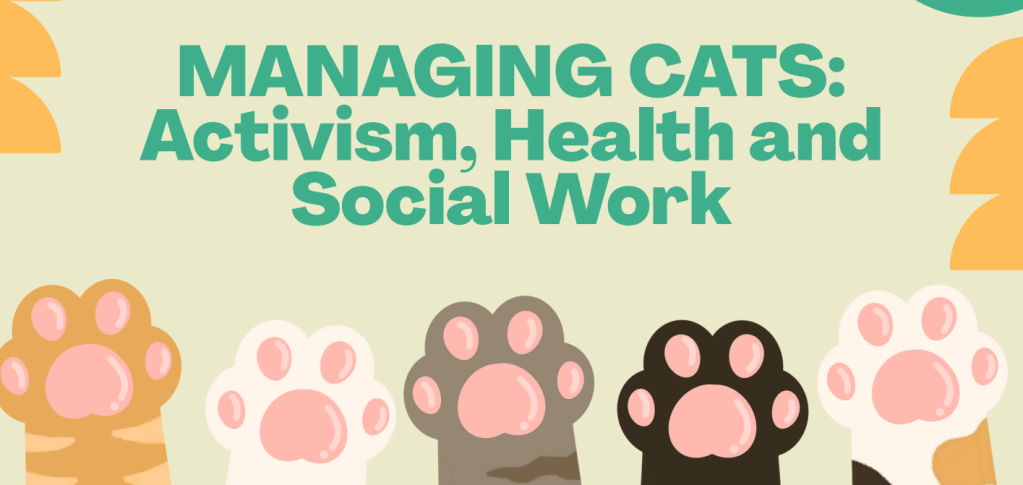
When I glanced at the programme for the 2025 Scottish Association of Social Workers annual conference, I saw my name next to a title that made me laugh out loud: “Managing Cats: Activism, Health and Social Work.”
That moment of humour was a welcome pause in a busy day. And maybe it’s a metaphor for the complexity of what we’re trying to do in health and social care just now: leading change in systems that often feels as unpredictable as a herd of cats.
From Conversations to Collaboration
The invitation to speak came from an academic social worker who has been a guiding voice in the collaborative approaches we’re developing in Argyll and Bute. Over the past few months, our conversations have sparked ideas and opportunities, often taking us beyond the reality of a struggling public sector to aspirations for a better future. We both know the current path of decline is not inevitable.
Those conversations led to me agreeing to run a workshop at the conference. My enthusiasm was high, and that must have been obvious. But work is hectic, and before I knew it, the big day was three weeks away. Looked at the programme, there it was: Managing Cats. First puzzled, then amused, I began to wonder. Who are the cats? Who is managing them? And what are we channelling our activism to achieve?
A Crowded Policy Landscape
The policy landscape in Scotland is indeed crowded. Common themes for 2025 include:
- Place-based working – rooting action in local realities.
- System-wide approaches – working across boundaries and silos.
- Reducing inequalities – focusing on those most in need.
- Prevention at the core – moving from crisis intervention to proactive approaches.
These ambitions are bold and necessary. But are overstretched systems ready for such change? I’m not sure. I’ve written before about feeling a compelling sense of urgency. I see this at senior leadership level, but not necessarily among staff delivering our services. Perhaps they are simply too overwhelmed by the day job to have headspace for big-picture thinking.
This matters because our workforce is by far our biggest asset. If we don’t create space for learning, reflection and innovation, we risk burning out the very people who hold the system together.
What Does Managing Cats Really Mean?
The cat metaphor stuck with me. Cats are independent, unpredictable, and resistant to control – much like complex systems. Managing cats isn’t about forcing alignment; it’s about creating conditions for collaboration. It’s about trust, flexibility, and shared purpose.
In Argyll and Bute, this is what we’re doing in our Communities Working Together group. Our geography makes collaboration essential. Small communities, vast distances, far-flung islands and limited resources mean no single organisation can succeed alone. We need health, social work, education, the third sector, community groups, local people, everyone pulling together. That’s not easy. It requires cultural and systemic change and also a consideration of where wealth and power rests, not just a structural change of organisations.
Activism and Action
My impression of social workers is that they are more likely to be placard-carrying marchers than your typical public health professional. The people attending the workshop did not disappoint. We spoke about being active citizens and involved in our communities. We also spoke about the current path of decline not being an inevitability. We noted that we can change this reality through collective action.
Activism in this context isn’t just about protest – it’s about courage. It’s about challenging assumptions, asking hard questions, and refusing to accept inequality, poverty and adversity. It’s about moving from passive compliance to active participation in shaping the future.
From Cats to Collaboration
The conversations at the conference reminded me that while the challenges are immense, the future isn’t fixed. If we harness collective energy, we can move from trying to manage cats to creating a society where everyone can flourish.
But this requires more than good intentions. It requires:
- Shared vision – clarity on what we’re trying to achieve.
- Collective leadership – sharing responsibility and power.
- Bravery – to disrupt inequalities that no longer serve us.
- Hope – for what is the point without it.
So, who are the cats? Maybe they are all of us – people, services, staff, communities, systems – at times moving in different directions, full of energy but with so much more potential if we collaborate and work together. Let’s light the fire of collective activism to create a new path to a better future.
 Public Health Artist
Leave a comment