21 March 2026
4 minute read
Living on a peninsula teaches you to look in more than one direction at once
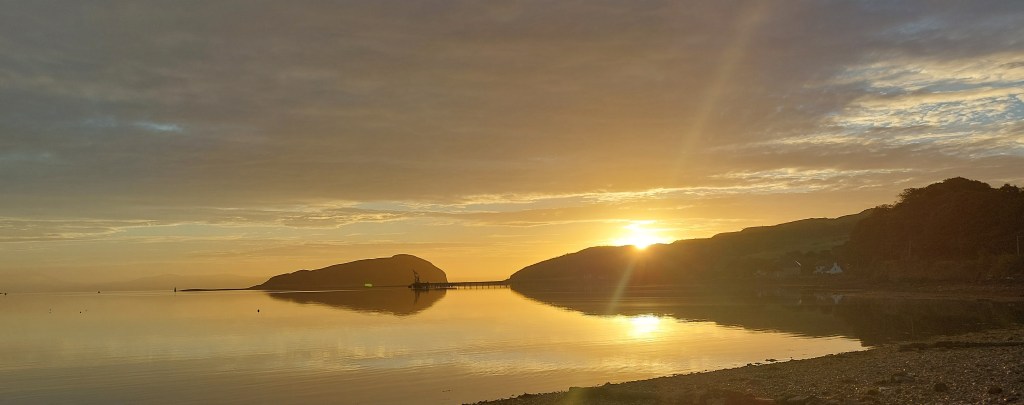
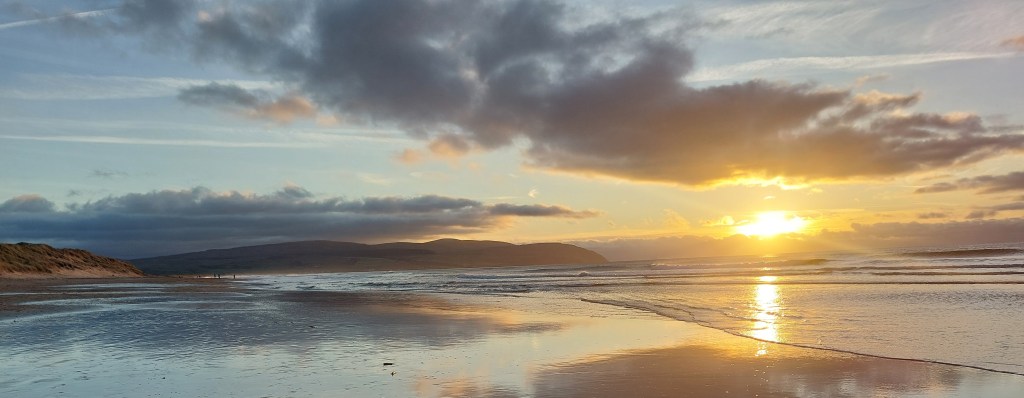
In the early morning I can stand on the beach, feel the breeze moving along the shoreline and watch the sun rise in the east, and later that same day, without going far, I can face west and see the sun sink into the sea. The simple act of turning from one horizon to the other has become a way of understanding the work we do in public health in Scotland, because progress depends on our ability to look back at what we already know while also keeping space for what we still need to imagine.
As the days grow longer and the light stretches deeper into the evening, this rhythm becomes easier to notice. Morning brings a sense of clarity that helps make sense of the landscape we are navigating. The cool air and gentle light provide room to think about Scotland’s long and often difficult story of health, wellbeing and inequality. Over many decades we have accumulated evidence and understanding about why health outcomes vary sharply across communities, and we know that income, work, housing and social connection have shaped lives for generations. Much of this learning has come from people rooted deeply in their places, who recognised early the conditions needed for change, yet our system has often struggled to hold onto that knowledge long enough to embed place in our practice.
The tide reflects a sense of repeated learning and forgetting. It comes and goes with dependable rhythm, yet never looks identical from one day to the next. There have been times when public health progress seemed steady, followed by periods when improvement stalled or reversed, and in recent years the reversal has become increasingly visible, with inequalities widening, financial pressures intensifying and more people living with uncertainty that undermines their health. Services and organisations describe growing numbers of individuals falling through gaps that have existed for a long time but have not been resolved.
Walking the beach after a storm can sharpen this awareness. The sea leaves behind whatever it can no longer hold, and the shoreline becomes a record of what has been unsettled, whether it is driftwood, sea glass or rubbish carried from far away. Scotland’s current health landscape feels similar, in that long-standing structural issues have shifted into clearer view. There is discomfort in seeing the scale of what remains unresolved, but there is also clarity, because once everything is laid out it becomes harder to pretend things are likely to improve.
Complex policy landscape
What complicates our efforts is the volume of policy and strategy surrounding us. Scotland has never lacked ambition, and we produce an extensive range of plans, frameworks and policies intended to guide improvement, but the abundance can make it difficult to see a clear route through. Strategies draw on familiar ideas, repeat themes from earlier documents or reframe approaches that have appeared before, and without the space to reflect on why previous efforts did not take hold, the policy landscape becomes crowded and disorientating. In such an environment it is easy to lose sight of what is genuinely needed to improve wellbeing.
Yet spending time in real places helps restore that focus. People rarely describe wellbeing in terms of policies; they talk about whether they feel supported, trusted or connected, and those experiences grow through relationships rather than documents. On the beach we see every day acts of connection. People walking with each other, swimmers offering encouragement, families exploring together.
Much of Scotland’s ability to respond to challenge still comes from our community energy and sense of belonging. Across the country, people continue to show creativity, generosity and a willingness to work together, and collective leadership often grows naturally from these relationships. It is not tied to roles or structures but develops when people recognise a shared purpose and choose to act on it. Geography can shape this too; in places like Argyll and Bute, islands and peninsulas create obstacles but also deepen the connections that make collaboration possible.
Looking to a new horizon
As evening approaches and the light softens, it becomes easier to think about the future and to imagine a Scotland where policy enables rather than complicates, where national leadership aligns with local experience, and where wellbeing is shaped by consistency, trust and partnership. Living on a peninsula is a constant reminder that perspectives shift with only a slight change in direction. Every sunset is followed by a sunrise, and both form part of the same cycle.
Standing on the beach in the early morning, listening to the wind and watching the first light appear, I am reminded that renewal is always possible. The challenge for Scotland is whether we are ready to combine what we have already learnt with what we still hope to create, and to shape our shared horizon with intent rather than habit.
 Public Health Artist
Leave a comment